Thursday, 24 June 2010

Pass the parcel


Just like the kids' party game, but under each layer of newspaper you have a question in the target language - when the music stops, the student with the parcel unwraps a layer then reads out the question & answers it.


Variations:
* the student who has the parcel when the music stops reads out the question, but picks someone else to answer it.
* include instructions in the target language as well as (or instead of) questions. simple things based on what they have learned: eg "draw a cat" "stand on the red chair and dance" ... use your imagination to challenge them!
* have a topic instead of a question. Students talk to the topic.
* specify the length of the answer required - single words, phrases, full sentences, or to really challenge: keep talking till the music starts up again!

What other ideas do you have?
How else can pass the parcel be adapted for the classroom?
What other kids' party games could be used?

Wednesday, 17 March 2010

An oldie but a goodie


Don't forget about hangman! Great for practicing the alphabet in language classes, as well as reviewing vocabulary.

Thanks to Joyce Arnold for her instructions / idea below for Indonesian!

Tikus!
I ask 'huruf apa?' and the kids have to use the Indonesian sound.
I don`t allow them to call out the word if they know it, they have to complete it completely first.
I use 'ada' and 'tidak ada' after they tell me the letter.
If 'tidak ada', I then draw the body of the mouse, saying 'badan tikus' adding body parts and using Indo as I go. Sometimes I change the animal.

Wednesday, 10 March 2010

Another quick number game...


This is another one I learned through the Peer Support Program, and have adapted it. Would only use it with real beginners with numbers, as you hear the same numbers a lot!

You need to explain the rules very clearly and carefully.

1) The aim is to see how high the class can count.
2) Only one person can call out each number.
3) There can NOT be any arranging of who calls out each number. Similarly, no prompting anyone else.
4) If 2 or more people say the same number, we start again.

There will be a few times when the class doesn't make it past 2! But a fun, engaging activity - perhaps have a couple of goes at the start (or end) of a couple of lessons to see how high your class can count.

Tuesday, 9 March 2010

Ada berapa? (How many? Number off!!)

As students enter the room, assign each a number (use consecutive numbers rather than random numbers, but they can be given out in random order rather than in numerical order around the room)

Have a run through - students count as a class by calling out their number at the appropriate moment. See how fast the class can get through it (with correct pronunciation of course!). Explain that some time during the lesson you will call out a key word (like "number off!" or "Ada berapa?") without giving any other prompting. At that time they will need to count again - good to see who is listening and paying attention to what is happening in the class! You might like to assign yourself the number 1, or choose to give the number 1 to someone reliable and / or near the front so that it won't totally fall flat.

Good for drilling numbers when first learning them.

a comment...

I am teaching Year 7s for the first time this year, and am discovering just how much younger they are than Year 8s. So the next few games may be more primary oriented. If you have any games for primary students (or any other games not mentioned here yet!), please get in touch!
Danielle

Sunday, 31 January 2010

stepping stones


Another version of a Q&A activity - can be vocab or longer answers...

Place stepping stones across the room (these can be pieces of paper, or the students love it if you use chairs or desks for them to walk across). As a student answers a question correctly, they take a step forward. This can be done as a team game, with the first team to get all members across winning. In this case, you may like to make rules which allow for students who have already made it across to go back across the stepping stones to help out a weaker student.

Another variation - "human checkers". Students can deliberately block others through their choice of where to step. (Or you can use real checkers rules to allow students to get other students out by "jumping over" them.

my word!

In some ways this is a variation of banned words or key words. Each student is given a secret word. They need to use this word as often as they can without anyone else guessing what word they have been given.

It can also be reversed - each student has a secret "banned" word, which they can't use for the lesson. The challenge can either be for them to simply get through the lesson, or they need to get other students to guess what the word is (kind of like charades, but talking is permitted)

I have also used this as a short, small group, card based game. I make up cards which have at the top a word which the student needs to get the others in the group to guess. To make it challenging, I add some other words which the student also may not use to the card. Example cards could be:
TEA (drink, hot, coffee)
UNIVERSITY (study/learn, student, school)

In Indonesian, I will often use a base-word (eg "ajar") which the students can not use. It means that they can use a different word that means the same thing if they can think of it, but also increases the range of banned words as they can not use any words that use that base.

At the end of the game, you can ask students to make their own suggestions for cards to use in the future. I have been using the same set of cards for a few years now, just adding to it from time to time. Once you've made up the cards, it's easy!

Banned words

Easily adapted to a variety of levels by the word you choose to "ban" for the set time period (this could be 10 minutes, a full lesson, a week or longer!)
With Upper school students this can be a great way to get them to practice circumlocution or finding synonyms.
With younger students or those with less knowledge, it can be for just practicing creativity & problem solving.

Reverse quiz

Very quick instructions for this: you supply the answers, students need to give the questions. (I really think students don't get enough opportunity to practice asking questions) Many of the other games can be adapted to this, or you can throw in a couple of "reverse questions" into a regular quiz or Q&A activity.

Thursday, 27 August 2009

Form up!

An easy number game, great for younger students. Have the students stand up around the room / space (outdoors is good). Call out a number, students have to form groups of that size. The race to form groups can make it exciting for little ones. Congratulate the group that forms the quickest!

Monday, 17 August 2009

What's the time, Mr Wolf?


A 3rd suggestion from Ida Harsojo. This is played the same as the normal version, but in the target language, of course! Great for primary classes & littlies...

I've taking this explanation from Wikipedia (click the link for variations)

One player is chosen to be Mr Wolf (the name usually remains "Mr Wolf" irrespective of the gender of the player). Mr Wolf stands at the opposite end of the playing field from the other players, facing away from them. A call-and-response then takes place: all players except Mr Wolf chant in unison "What's the time, Mr Wolf?", and Mr Wolf will answer in one of two ways:

* Mr Wolf may call a clock time - usually an hour ending in "o'clock" ("Three o'clock!").

The other players will then take that many steps towards Mr Wolf, counting the steps out loud as they go ("One, Two, Three!"). They then ask the question again.

* Mr Wolf may call "Dinner Time! (or, occasionally, "Lunch Time!"). "Midnight!" may also be used.

At this point, Mr Wolf will turn and chase the other players back to their starting point. If Mr Wolf successfully tags a player, that player becomes the new Mr Wolf for the next round.


(the version I played as a child was different again from the variations suggested on Wikipedia - another game with lots of different ways of playing!)

Unnamed! Suggestions, please!

Another game from Ida Harsojo! This is written with Primary MFL in mind, but could easily be adapted for older & more confident classes.

Divide the class into as many teams as you can, the more the better.

Write several questions on the board - for example:
1. Write 2 Indonesian words starting with S
2. Write a country starting with S (in English if Indonesian is too hard)
3. Write a big city starting with S (in English if Indonesian is too hard)
4. Write a fictional character starting with S

Every team should write their answers on a piece of paper. Once all finish, the teacher has to write their answers on the board so everyone can see the answers. Any answer that is the same only gets 5 marks, if a team comes up with an answer tht no one else has they get 10 marks. So the aim is to think of an answer which no one else thinks of.

Add the marks, the team who gets the most mark, wins.

Sunday, 16 August 2009

King Monkey


This one has been suggested by Ida Harsojo, from NSW.

Students sit in a circle. One is out (to guess later who Raja Monyet is) – so usually he/she is sitting outside the door of the classroom. The class, sitting in a circle decide who raja Monyet(King Monkey) is. The one who is outside is called back.
He/she asks someone else ‘Siapa namamu?’ (What's your name?) the student who is asked will say their names if he/she is not Raja Monyet. When the one who is designated to be Raja Monyet is being asked, he/she has to answer ‘Raja Monyet’, and he/she will be the one out. Keep track how many guesses the students do, the one who asks the question the fewest times win. The students love being the one outside, and the others are happy to be among Raja Monyet too. This is meaningful repetition for asking ‘siapa namamu’?

You can change the question into ‘Kamu dari mana?” The students can answer their origin, while the one will be answered dari ‘hutan’ (from the jungle - for orang-utan). And he will be out. The question can be ‘Berapa umurmu?’ (how old are you?) Just decide which number is the magic one depending on the ages of the students and decide a much older age etc.

Saturday, 15 August 2009

Key Words


Each student is given a word for the week (or fortnight, or even just for the lesson). Carry on your lessons as normal, but occasionally call out one of the allocated words. It could be done deliberately (eg call it out while students are doing some quiet work - if that ever happens!) or just mentioned naturally as part of the lesson depending on the words you use.
If the student recognizes it as their word and remembers to stand up, then they get a point or some kind of reward.
This can be a way to give weaker students a go - give them a word that is likely to come up more often.

Categories

this is pretty well known, and can be played orally as "Think Fast" (see below.) Otherwise, give students a time limit (between 15 and 45 seconds works well to keep everyone engaged and keep it "pacy" - but you can give longer limits if your students have the vocabulary and the attention span!) - I give a different limit each time, and don't always warn students how long they will have.

Give a category (things that are usually red, activities that don't involve a ball... the more creative the category the better, but you can stick with standard MFL categories such as words beginning with..., things you'd find in a classroom) and call out your "start!' word (in the target language.)

Students write down as many words as they can think of that fit the category. Students get one point for each correct word they have written by the end of the time limit.

A variation: Once you have stopped them (at the end of the time limit), ask the student who has come up with the most words to call out their words. If they call out a word that others have written down (they call out to say) doesn't count. All students need to cross out any words that anyone else has also written - this means students start getting creative and thinking laterally about what words to write down.

Another variation: as a team game. Give a longer time limit, and each team has one pen and one peice of paper. The paper can be sticky-taped up on the wall (each piece away from the others so that the other teams can't read them!). Students are grouped on the other side of the room so they need to run to the piece of paper, write down their word then run back to pass the pen on to the next person.

Of course, there are lots of other ways to adapt this one - please add your version as a comment below!

Steps

You will need a defined space for this one if playing outside. It can be played in the classroom with all the furniture left as is, or you can re-arrange or remove the desks.

Students stand up and spread themselves around the space.

The teacher asks a question and selects someone to answer (e.g. first hand up.) If the answer is correct, the student takes a step. If they can reach another student to “tag” them, the tagged student is out and must sit down. Students may chose to step further away instead.

Continue until there is just one student left standing, or until the students become a little restless.

Variations: If no one who is standing can answer a question but someone who is out can answer correctly, then that student can rejoin the game.

A magnificent answer (e.g. full sentence, demonstrating newly taught structure or something else unexpected but wonderful) earns the right to take 2 steps.

Thursday, 13 August 2009

Noughts and Crosses - From Anne MacKelvie


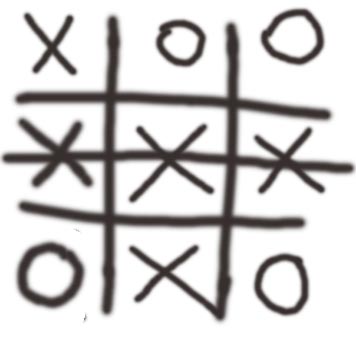
Set the vocabulary cards up in a noughts and crosses formation on the board. Split the class into two teams, one being the noughts and one the crosses. The pupils have to correctly name the vocabulary in order to place their 0 or X.


Students from all year levels like this one!

Hatschi Patschi

From Anne MacKelvie:
Students sit in a circle on chairs (all facing into the circle).
One student is "it" and has to stand facing away from the circle. The teacher gets all students in the circle to close their eyes and then proceeds to tap 3 kids on the head. All students may then open their eyes and the person that is "it" may come into the circle.
This student will go around the circle asking individual students a question in the target language. Each student is required to give a correct answer, except for the students that have been tapped on the head. When a question is addressed to them they simply call out "Hatschi Patschi", which is the signal for all students in the circle to jump up and run to a different chair (incl. the student who was in the middle).
The new student left without a chair is now "it" and the game begins again.


(Danielle's comment: I am looking forward to trying this one with my students. The basic circle & swapping seats idea is explored in different ways under the heading of "Fruit salad" further down the page.

With beginner learners, the question can be the same one repeated over and over as a way of drilling both the question and practicing responses, and swapped (or not) with after each "hatchi patchi". With students who have a wider knowledge of the target language, you can make a rule that students can't repeat a question.)

team whispers


Write a good selection of numbers on the board (depending on the age of your children) and divide the class into 2 teams facing the board.
Stand at the back of the classroom and call one student from each line over to you. Whisper a number from the board to the students, who then have to run back to their team and whisper it to the next person in their line.
The whispers carry on down the line until they reach the person at the front who has to find the number, slam it with their hand and shout the number. This game can also be used with any vocabulary being used (fruit, family etc) simply by putting the pictures on the board.
A great game for all ages which has never let me down!

¡ƃuıpoɔǝp

Another one from Anne - a worksheet based game this time.

This fun worksheet activity is based on the popular anagram pencil puzzles. I've used it in Russian class for ages 11-13, but am currently adapting it for other languages and younger children.
Choose 10-12 vocabulary words that you would like to reinforce with your students. As you develop your list, have in mind a common idiom or well-known saying in the target language whose words contain letters found in the vocabulary list. Scramble the vocab words, placing the appropriate number of blank dashes next to each one.
At the bottom of the page, place dashes for each letter of each word of the idiom or saying that you want your students to "decode." Number each dash of the unscrambled letters that are to be transferred to dashes of the mystery phrase at the bottom. You can give clues for the anagrams, if necessary.
As your class unscrambles the words onto the dashes, they transfer the numbered letters to the dashes at the bottom, revealing the "code."
This activity is fairly quick and simple for a teacher to devise, yet also fun, reinforcing and informative for students.


Another "code" you can use when starting out with learning numbers is to assign each letter of the alphabet a number, then write the numbers out in words, if that makes sense. (So, if you go with the standard A=1, B=2, C=3 etc then the word "great" would be spelled out using "seven eighteen five one twenty" - but in the target language. eg, "tujuh delapan belas lima satu dua puluh")

(I've done something very similar by typing in a list of words, sentences or a message in Word (or similar), then changing the font to Webdings or wingdings, and providing a key at the bottom (the alphabet in both webdings and "normal" font.) Students love codes, and this has always been popular! I used it a couple of times in Saya Bisa! - Danielle)

Hot and cold

From Anne again!
This can also be used for teaching anything that needs chanting (e.g. counting numbers). One person leaves the room and the other pupils hide an object. As the person comes back in the pupils start chanting louder as the person gets nearer and quieter as the person is further away until the object is found. When the object is found, another pupil gets to go out.

(this one is also one of the games on "short & simple ideas for MFL classes - the link is on this page under "Other fun and games" - it's very much worth checking out! - Danielle)

Living bingo


Thanks again, Anne! You're a star!

You will need 2 sets of cards, one set with the Indonesian word and the other with either a picture or the English word.
Hand out the Indonesian words to the students and divide the class into groups of 4 or more. I usually divide my class into 4 groups and have each group stand in a corner with their cards. Then call the English word or show the picture. The person with the Indonesian card gets to sit down.
The first team with all its members sitting is the winner (Bingo!).

Tidak ada (What's missing?)

Thanks Anne for this one too!

Put some objects on a table, for all the class to see.
Go through each item in Indonesian, then ask a pupil to remember all the items on the table, get that pupil to then leave the room.
Take an item off the table and then get that child to come back into the room and tell the rest of the class what item is missing in that language.
If it is correct they get to choose what item to take away next time.

Anjing, anjing, kucing (or duck, duck, goose!)


This game is played with the children sitting in a circle. You start with one child walking around the outer edge saying selamat pagi, selamat pagi and sampai nanti! or anjing, anjing, kucing (or any other combination).
Whoever the child taps on the head and says ‘sampai nanti’ or ‘kucing’ to has to get up and chase them around the circle. Obviously, to make it a surprise who will be the chaser, the student walking around the circle doesn't need to say "kucing" / "sampai nanti" / "goose" on the third child - but it can be a useful rule that they can not go around the whole circle more than once!

The winner is the child who sits down first or the child who tags the other. The other child repeats the process.

Works really well with littlies - although Year 10s have been known to suggest it as a game to play!

Budi Berkata...

Another one from Anne! It's also great for parts of the body and sports as well as drilling classroom instructions.


My Year 5 and 6 beginners love this one! Just like Simon Says, but use ‘Budi Berkata’ instead. The instructions I use are berdiri, duduklah, berjalan, berlari and berhenti – but you could add many more! When students start getting too clever, pick the ones that are slowest to move or move even a little. I ask the ones that are already out to help me pick the others, to give them something to do.

Scavenger Hunt


I love this one as a game that can be used with upper school students - we often tend to forget to play games with them, plus you can add more variety of objects. This can also be used as a dictionary practice activity of you give vocabulary items that they haven't yet come across. Thanks to Anne MacKelvie for reminding me of this one!

Make a list of items in the target language. Send students in teams to find one only of each item. First team back (or the team who has found the largest number of items from the list!) is the winner. (Perhaps agree on a finishing time or you may never see your students again!)


Another variation on this one is to provide clues in the target language for students to follow around the school - this can be simple directions or puzzle clues - it is up to you how cryptic you want to make them! Either the students list the places they go, or the next clue can be left with someone at each location (kind of like The Amazing Race on TV)

Sebelas

Thanks very much to Anne MacKelvie from Victoria for emailing me the instructions for this one! I have also had fun with this with my classes in the past (I first saw it in Inside Indonesia when there was still a print version) - give it a try!

Anne's instructions:
This is a great game to learn numbers. All students stand in a circle. Choose one student to start counting at ‘satu’. They may say up to 3 consecutive numbers ie 1, 1 2 or 1 2 3. Next child has their turn, choosing to count the next 1, 2 or 3 consecutive numbers. The idea is NOT to say ‘sebelas’ because if you are forced to say this number, you are out and have to sit down! After someone says sebelas, you start counting at 1 again. Last one standing is the winner. Make it a rule that students are not allowed to tell other students how many numbers to say in order to get someone out.

Sunday, 26 July 2009

Snake words


Another vocabulary exercise: one student gives a word, the next word must start with the final letter or letters of the first word, and so on. The challenge is to see how long a “snake” can be created without repeating a word.

This can be done in writing individually or in small groups (2 or 3), on paper, on computers or on the board.

I have also done this as an oral activity going around the class, or as a variation on “think fast.”

A final variation – as a competition. Individuals or teams take turns to contribute words to the snake, with points awarded to the team that gives the final word (ie when the other team can not come up with a word that will work)

Write, Draw or Translate!


This game was taught to me by a prac teacher a few years ago (maaf, ya –saya lupa siapa!) and is one of those games that is surprisingly effective.

Divide students into 4 or 5 groups and give each group a whiteboard marker (it is easiest if each group has a different colour, but it’s not essential). Each group selects a representative who goes up to the board.

Using the target language, give an instruction – either “write *vocabulary item*”, “draw *vocabulary item*” or “translate *vocabulary item*”. Each person at the board quickly does as instructed, then squats down on the floor so it is clear that they are finished.

“Write” can be substituted with “Spell” as it is basically a spelling task. (With Indonesian, it can be good to give them unfamiliar words for this to remind them to listen to how a word sounds when trying to spell.)
“Draw” is asking for the meaning to be shown in a clear, appropriate drawing.
“Translate” – you can give the vocabulary item in either English or the target language, and they provide the translation.

If the first person to squat down is correct, then they get a point. Otherwise the point goes to the first correct or best answer.

Each person gets 3 turns, then swap to a different team member. Make sure every team member gets a turn and that teams don’t just send up their strongest player repeatedly.

This is a pretty quiet game, as any calling out is not permitted!

Variation – get a student to take over the teacher’s role (calling out instructions)

Thursday, 23 July 2009

Board and card games that can be adapted


keeping this one short & sweet:

Uno! - students have to name the colour & number or instruction in the target language as they play. Useful & fun to add extra words such as "cheat!" "I win!" "whose turn?"

Guess who!
- great for encouraging students to learn extra words beyond the basicsto describe people, and to be creative with what they know (eg use of negatives). Also interesting if you have discussed / taught how people in the TL describe people (ie - Indonesian people don't tend to focus on hair colour and eye colour as much - they talk about face shape, eye shape - how can these be applied?)
Pictionary - you don't even need to own the board game for this one! Students need to draw a word that is given without using symbols or letters, other students have to guess the word. Can be quite challenging depending on the range of words they have learnt, and especially if you don't limit it to nouns and verbs...

and, of course, you can purchase games like monopoly in the Target Language. Even better: there is the option of getting your students to design board games - some of these are great and almost professional in standard!