Showing posts with label small group games. Show all posts

Saturday, 27 September 2014

I have... Who has...?

I hesitated to share this one for two reasons - firstly, because it does require some more preparation than most games in this blog, and secondly, because it was the first time I've used a game that was a complete failure - or so it felt at the time.
The thing that bothers me is I can't see why it failed. It's a great concept, the kids (my Year 9 class, who have been playing games with me for 2.5 years now) agreed that it should work... but it just didn't.
The instructions (pinched directly from Games in the Foreign Language Classroom, which has a great range of games with clear instructions), are copied at the bottom of this post. You may want to read them first before reading about how it went with my class...
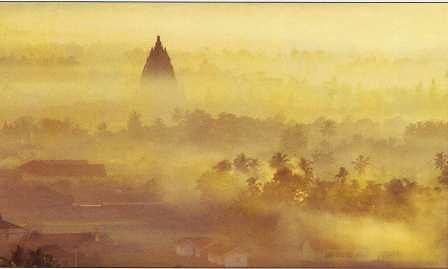
We played it with weather & cities ("It's raining in Surakarta, what's the weather like in Banda Aceh?").
Coming up with more than 50 places so that the kids would get at least 2 cards each took a little research!  I tried not to repeat the weather types too much, by giving different combinations and by adding modifiers (very, a little) etc where I could. Next time I'd add temperatures as well. To give students a reason to listen, I made them write down the weather of the place they were asking for. I used English only on the cards, and the weather was dot-points rather than a sentence.

The kids and I found it frustrating as it only took a momentary lapse of concentration for someone to not hear the question that corresponded with their card, so there were long pauses and quite a bit of repetition across the class (Who has Sulawesi? Alice, do you have Sulawesi?" - poor Alice was the first one to not hear her place, and so when the next pauses occurred, everyone immediately blamed her - yes, the name has been changed!)

BUT - on reflection:
  • the students did hear the question and relevant sentences over and over without being bored by it.
  • the students practiced asking about and giving details about the weather
  • the students were exposed to a lot of Indonesian cities, regions and places that they hadn't heard before (as well as some familiar ones) - and this prompted discussion about where places were, similarities in names as well as differences and the fact that some place names were similar to familiar words.
  • Most of the frustration expressed and resolved in the target language (eg, other people around the room repeating the question or asking poor Alice directly in Indonesian rather than in English)
So - yes, I will use this again. Perhaps I'll experiment first with that Year 9 class now that they know how to play, experimenting with dividing them into smaller groups as is suggested at the end of the instructions at Games in the Foreign Language Classroom. I also didn't use a stopwatch - maybe this would add a little more excitement & "need for speed" so I will definitely incorporate a timer next time I give it a go.

Maybe it was just because it was the last lesson of the day of the last Monday of what has felt like a long term... (they did much better with Weather Battleships the next day!)

Do you have any other ideas on what could make this work? I'd love to hear from you!

I have __, Who has ___?
• Teacher must prepare cards carefully in advance as follows:
o Each card has “I have” and a vocabulary word in the TL on the top half.
o On the bottom half the card has “Who has” and a different vocabulary word pictured or in English.
o The cards “chain” so that eventually they circle back to the beginning.
In these examples, imagine the top in the TL:


I have Dog
I have Cat I have Horse I have Cow I have Duck I have Hen
Who has Cat? Who has Horse? Who has Cow? Who has Duck? Who has Hen? Who has Dog?

o The set should contain enough cards so that every student will get one to three cards.
o Be creative: if the vocab list isn’t long enough, tweak the way it’s used: for ex weather (in Nice it's cold what's the weather in Paris?)

• Shuffle the cards, and distribute them all. If students have more than one card, each student should make sure than his/her cards don’t connect.
• Teacher begins by starting a stopwatch and calling out “Who has” and one of the words (in English). (I borrowed a stopwatch from the PE teachers until I got my own—sometimes one of the students has a stopwatch feature on his/her watch).
• The student who has the TL for that first word reads their card: “J’ai chien. Qui a cat?” (Tengo perro. Quien tiene cat?).
• The next student reads their card.
• The object is to get through the whole set as quickly as possible.
• I have multiple sections, and make it into a competition—each class period get three attempts (and we trade cards in between each round).
• If you plan carefully enough, you can make each set the same number of cards (thirty, let’s say) and have the class attempt to beat their past times (works instead of competing among sections)
• After the class learns how to use the cards, use the sets in groups so each kid has 5 or 6 cards each. They really get lots of vocab practice.

Sunday, 31 January 2010

stepping stones


Another version of a Q&A activity - can be vocab or longer answers...

Place stepping stones across the room (these can be pieces of paper, or the students love it if you use chairs or desks for them to walk across). As a student answers a question correctly, they take a step forward. This can be done as a team game, with the first team to get all members across winning. In this case, you may like to make rules which allow for students who have already made it across to go back across the stepping stones to help out a weaker student.

Another variation - "human checkers". Students can deliberately block others through their choice of where to step. (Or you can use real checkers rules to allow students to get other students out by "jumping over" them.

my word!

In some ways this is a variation of banned words or key words. Each student is given a secret word. They need to use this word as often as they can without anyone else guessing what word they have been given.

It can also be reversed - each student has a secret "banned" word, which they can't use for the lesson. The challenge can either be for them to simply get through the lesson, or they need to get other students to guess what the word is (kind of like charades, but talking is permitted)

I have also used this as a short, small group, card based game. I make up cards which have at the top a word which the student needs to get the others in the group to guess. To make it challenging, I add some other words which the student also may not use to the card. Example cards could be:
TEA (drink, hot, coffee)
UNIVERSITY (study/learn, student, school)

In Indonesian, I will often use a base-word (eg "ajar") which the students can not use. It means that they can use a different word that means the same thing if they can think of it, but also increases the range of banned words as they can not use any words that use that base.

At the end of the game, you can ask students to make their own suggestions for cards to use in the future. I have been using the same set of cards for a few years now, just adding to it from time to time. Once you've made up the cards, it's easy!

Thursday, 13 August 2009

Scavenger Hunt


I love this one as a game that can be used with upper school students - we often tend to forget to play games with them, plus you can add more variety of objects. This can also be used as a dictionary practice activity of you give vocabulary items that they haven't yet come across. Thanks to Anne MacKelvie for reminding me of this one!

Make a list of items in the target language. Send students in teams to find one only of each item. First team back (or the team who has found the largest number of items from the list!) is the winner. (Perhaps agree on a finishing time or you may never see your students again!)


Another variation on this one is to provide clues in the target language for students to follow around the school - this can be simple directions or puzzle clues - it is up to you how cryptic you want to make them! Either the students list the places they go, or the next clue can be left with someone at each location (kind of like The Amazing Race on TV)

Sunday, 26 July 2009

Snake words


Another vocabulary exercise: one student gives a word, the next word must start with the final letter or letters of the first word, and so on. The challenge is to see how long a “snake” can be created without repeating a word.

This can be done in writing individually or in small groups (2 or 3), on paper, on computers or on the board.

I have also done this as an oral activity going around the class, or as a variation on “think fast.”

A final variation – as a competition. Individuals or teams take turns to contribute words to the snake, with points awarded to the team that gives the final word (ie when the other team can not come up with a word that will work)

Sunday, 12 July 2009

team bingo


There are lots of versions of team bingo, and lots of variations on each one - this is the one I use most often.

Divide students into small groups, preferably equally sized (3 per group works well, no more than 4 recommended.) Each group will need a piece of paper and pen / pencil. Get each group to draw up a grid of 9 squares (3x3), each square large enough to write in (approx 3cm x 3cm would be my minimum - or say 1/2 page for the total grid)

On the board, draw up your own matching grid. In each grid, write a word or sentence (depending on language level). Students must work as a group to provide a the TL equivalent if the clue is in their first language, or the 1st language equivalent if the clue is in the target language. But it must be perfect - spelling, word order, punctuation etc...
Because it students are required to give an equivalent, a translation won't always be right - eg bon voyage = happy travels not good traveling.

When they think they have it, they bring it to the teacher. You tell them how many they have correct (but not which ones) and they can go and make changes.

First group to get it all perfect wins!


You can make up grids for the students in advance and print out (either blanks or ones with the clues printed on it), or use a projector to show the clues (then you can use pictures as clues also) - depending on how organised you are!